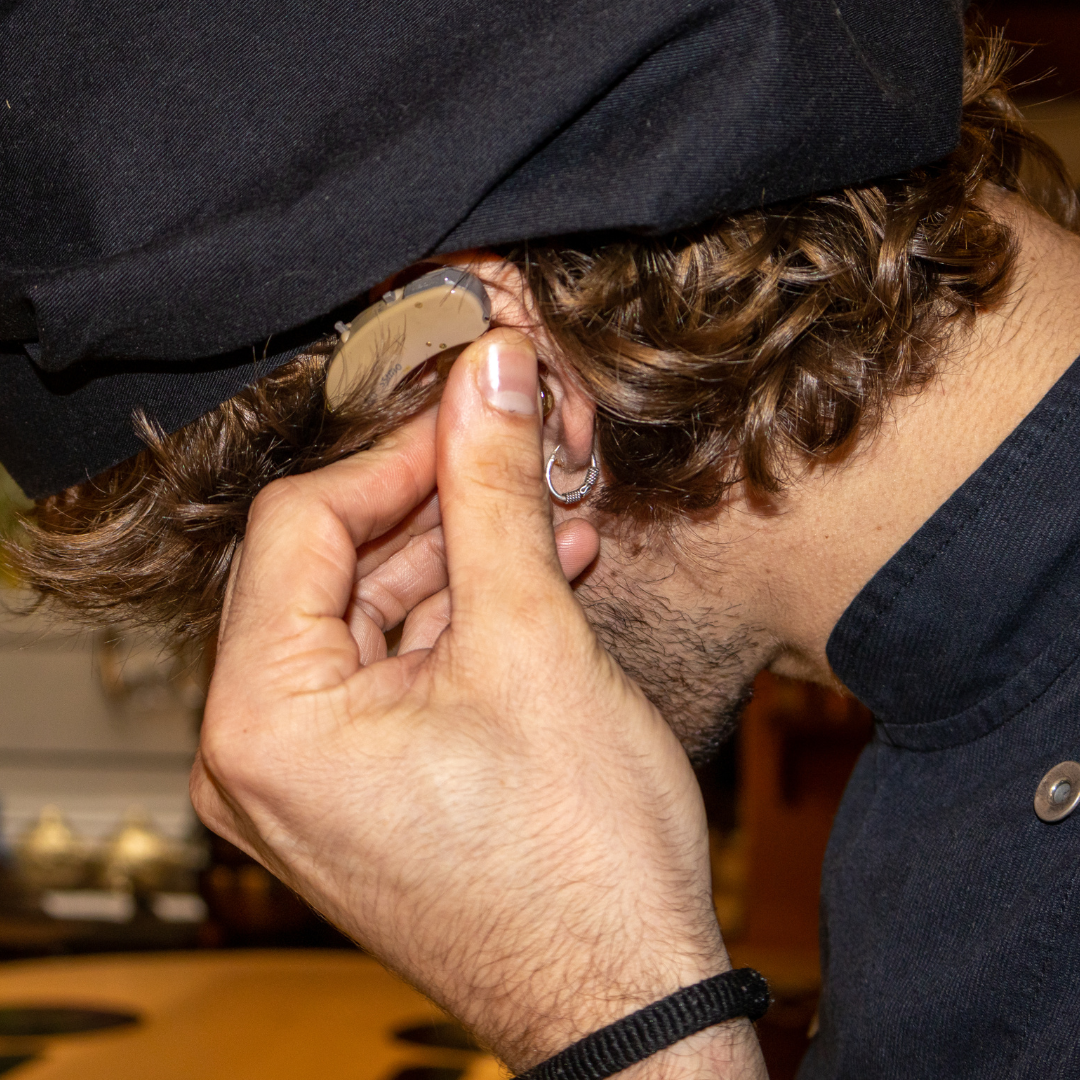
Tracking speech in busy dining venues can feel exhausting when environmental noise drowns out your hearing. Our practice can evaluate hearing in both quiet and noisy conditions to identify what makes these environments difficult. Once we determine the cause of difficult hearing, we can help you find personalized solutions.
Explaining Normal Quiet Hearing Versus Restaurant Listening Fatigue
A quiet setting creates an optimal signal-to-noise ratio, ensuring the conversational partner’s voice rises cleanly above ambient sounds. Commercial restaurant spaces present the polar opposite acoustic dynamic. Background voices, loud music, service clatter, and wall reflections collide with spoken words, demanding heightened cognitive processing to isolate individual speech.
Such listening challenges typically stem from high-frequency hearing loss, auditory-processing deficits, or accumulated noise-induced trauma. Dim lighting, physical tiredness, conversational distance, and divided attention exacerbate these listening deficits. Many individuals register normal audiometric thresholds on standard pure-tone screenings yet show profound deficits during speech-in-noise testing. Experiencing speech-recognition struggles in noisy dining venues warrants a formal audiological evaluation regardless of seemingly normal quiet hearing.
The Audiological Process for High-Frequency Hearing Loss
The diagnostic workup opens with an extensive intake examining difficult listening environments, past noise trauma, tinnitus presence, family history, and medical history.
Pure-tone audiometric evaluations measure the absolute quietest sounds audible across specific octave frequencies using air and bone conduction. High-frequency loss often creates an audiogram pattern in which thresholds become poorer as pitches rise. Diagnostic evaluations may also integrate acoustic tympanometry to check middle-ear pressure alongside word-recognition testing to evaluate speech processing.
Since sound-treated booths cannot replicate the chaos of a crowded dining room, speech-in-noise testing provides critical real-world insight. This procedure gauges speech-discrimination accuracy while competing multi-source noise becomes incrementally louder. Together, these audiological findings indicate whether the issue involves sound audibility, speech intelligibility, noise-processing dysfunction, or multiple compounding factors.
The Role of Central Auditory Processing Disorders in Adults
An auditory processing disorder compromises how the central auditory pathways and brain decode incoming acoustic information. The peripheral auditory system may register sounds within normal limits, yet the brain falters when separating competing acoustic inputs, sorting speech sounds, or tracking fast speech. We prioritize assessing peripheral auditory acuity before recommending an in-depth central auditory-processing assessment or external medical referrals.
Actionable Listening Tips for Noisy Social Settings
Simple situational adjustments enhance the speech signal entering your ears and offer clearer facial cues. Before leaving home, identify quieter dining venues or plan to eat during less crowded service times. Facilities equipped with upholstered booths, acoustic baffles, fabric curtains, carpeted floors, and soft materials prove far easier on hearing than minimalist, hard-tiled spaces.
While seated at the restaurant:
- Request table placement positioned away from dishwashing stations, bustling bars, sound speakers, and celebratory gatherings.
- Sit with a perimeter wall directly behind you to cut down on ambient noise approaching from the rear.
- Face your conversation partners in good lighting.
- Maintain the shortest comfortable physical distance between yourself and your conversation partner.
- Orient your stronger ear toward the key person you want to follow in conversation.
- Prompt companions to rephrase unclear sentences with alternate terminology instead of repeating identical words.
- Confirm important details rather than pretending to understand.
- Step away for a brief auditory rest when cognitive listening fatigue begins to set in.
- Ask dinner guests to speak with clear enunciation at a steady, natural conversational rate.
- Raised or shouting voices warp acoustic phonetics and rarely improve speech intelligibility.
Advanced Technology for Hearing in Background Noise
Selecting the ideal assistive technology depends upon underlying diagnosis, specific acoustic challenges, and verified hearing loss. Prescription hearing aids fitted by an audiologist leverage directional microphone arrays, advanced digital noise reduction, and dedicated restaurant programs to focus on frontal speech while dampening background sound. They still require realistic expectations because no device can remove every unwanted voice.
Pairing your devices with a remote wireless microphone generates a substantial improvement in the direct signal-to-noise ratio. The microphone is placed near or worn by the speaker and sends that voice directly to compatible hearing aids or another receiver. This targeted setup effectively neutralizes the negative impacts of room distance and interfering background noise.
Additional effective assistive technologies include:
- Table microphones for small-group conversations
- Telecoil sensors configured to access hearing-loop broadcasts in looped facilities
- Real-time smartphone speech-to-text transcription and live-captioning apps
- Over-the-counter hearables equipped with directional speech-enhancement algorithms
- Sound-level meter applications and community-driven quiet dining guides
We analyze suitable devices, verify functional compatibility with your current setup, and guide you through real-world operation.
The Clinical Role of Audiologists in Managing Loud Environments
A comprehensive hearing evaluation looks far beyond the common misconception of “I hear fine in quiet environments.” We examine the challenging acoustic venues, conversational setups, and noise profiles you encounter to select appropriate diagnostic tests. Testing routinely combines pure-tone audiometry, middle-ear impedance tests, speech discrimination, and speech-in-noise measures. Auditory-processing testing may be considered when the history and initial results support it.
Sudden unilateral hearing drops, acute asymmetric changes, or rapid auditory decline mandate evaluation by an ear, nose, and throat physician. Individualized diagnostic care pinpoints the precise physiological etiology rather than merely blaming restaurant noise for communication struggles.
Request an Audiology and Hearing Evaluation Today
If dining in loud spaces leaves you feeling isolated, fatigued, or guessing at missed speech, contact us to schedule a thorough hearing evaluation. We will help you navigate hearing in noisy environments by implementing advanced hearing aid options, assistive accessories, or therapeutic auditory strategies tailored to your lifestyle.
Reach out to our audiology clinic today to schedule an evaluation and begin enjoying clear, effortless conversations.