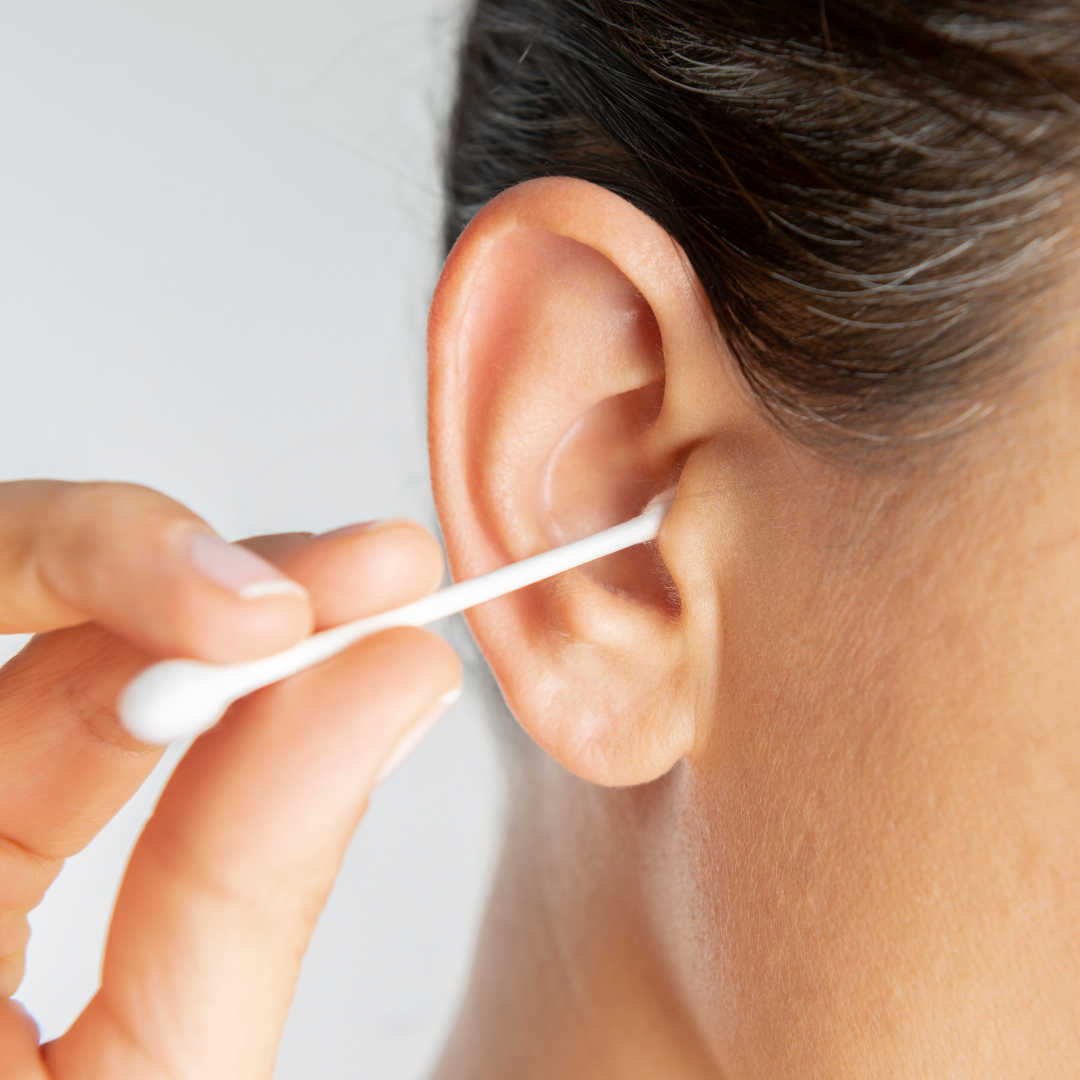
Cotton swabs may seem like convenient ear-cleaning tools, but inserting one into the ear canal can make cleaning harder over time and may damage your ears. Our specialists determine if cerumen warrants clinical clearing and advise on targeted methods designed to protect your hearing health. Ears don’t always need manual cleaning; however, if wax builds up, we can help patients safely remove excess wax.
Why Are Q-Tips Bad for Your Ears?
Clinically speaking, earwax, or cerumen, should never be regarded as dirt or debris. It traps dust and debris, helps limit bacterial growth, lubricates the ear canal, and protects its sensitive skin. Standard jaw mechanics and lateral skin shedding propel oxidized wax toward the outer meatus, allowing it to dry and wash away during daily washing.
Introducing a cotton swab into the ear pathway severely disrupts the ear’s organic cleaning process. While you may see a tiny amount of wax on the swab, the device generally shoves the rest deeper toward the eardrum. Chronic swab insertion frequently compresses cerumen into a dense impaction, triggering a sensation of aural fullness that invites improper cleaning cycles.
Swabs can be safely applied along the outer ear cartilage, but they should never be inserted past the canal aperture.
How Cotton Swabs Cause Physical Trauma to the Ear
The skin lining the ear canal is thin and easily scratched. Microscopic tears cause acute discomfort or hemorrhage while exposing tissue to bacteria, which heightens the probability of an outer ear infection. Additionally, the swab tip can shear off and lodge itself securely inside the ear canal.
Swab-related clinical injuries include:
- Earwax compressed tightly against canal walls
- Skin abrasions, tissue swelling, severe irritation, and active bleeding
- Acute otitis externa or canal infection
- Foreign body retention including detached cotton fibers
- Structural tears or perforations across the eardrum
- Ossicular chain disruption or damage behind the tympanic membrane
- Temporary conductive loss or permanent auditory changes
- Onset of tinnitus, positional dizziness, or acute ear pain
While severe structural trauma occurs infrequently, accidental elbow jostling, sudden slipping, or over-insertion can provoke profound injury.
How Often Should Earwax Get Removed?
Most people do not need to remove earwax on a schedule. Healthy ears continually move wax outward, and routine bathing usually cleans the visible outer ear. Frequent overcleaning creates dry, irritated canal surfaces while amplifying the risk of severe impaction or microbial invasion.
Cerumen removal is indicated when buildup obstructs the canal, hinders tympanic membrane visualization, degrades hearing aid performance, or generates symptoms.
Clinical Guidance for Safe At-Home Cerumen Care
In the absence of earwax symptoms, allowing natural physiological clearance is universally the safest strategy. Restrict hygiene to wiping the outer ear folds with a damp cloth while permitting the canal to self-evacuate.
If cerumen requires softening, we might suggest an over-the-counter preparation or ear drops formulated with carbamide peroxide, mineral oil, saline, or glycerin. Use only the labeled amount and for the labeled duration. Stop treatment promptly if the drops elicit sharp pain, noticeable dizziness, allergic rash, or worsening hearing complaints.
Home flushing is contraindicated in many cases and should solely be conducted after an expert confirms safety and reviews proper methods. Never utilize motorized oral irrigators or dental water devices in the ear canal. Avoid ear candles, metal scoops, camera-guided tools, hairpins, and home suction devices. These hazardous instruments often cause cutaneous burns, sharp cuts, eardrum ruptures, or compounded cerumen impaction.
Recognizing When Earwax Requires Clinical Intervention
Set up an audiological evaluation whenever your ear stays plugged after softening care, wax is firmly impacted, or home efforts fail repeatedly. Expert removal is the safest path for patients who struggle to hold still, individuals with narrow ear canals, hearing aid wearers, or those with surgical contraindications to irrigation.
Request an immediate diagnostic examination for:
- Persistent otalgia, stubborn itching, or painful sensitivity around the ear
- Blood, cloudy purulence, clear fluid leaks, or foul-smelling ear discharge
- Fever combined with visible swelling or redness around the ear
- Sudden-onset tinnitus or vestibular dizziness
- Hearing loss that starts abruptly or fails to resolve following wax removal
- Any concern of a ruptured eardrum or detached cotton swab tip
- Recurrent impaction that affects hearing devices
Sudden drops in hearing in a single ear require emergency medical attention rather than casual attribution to earwax. Rapid audiological testing differentiates simple cerumen obstruction from serious, time-sensitive inner ear disorders.
How Can a Doctor Remove Excess Earwax?
First, we inspect the auditory canal under otoscopic or microscopic visualization to confirm wax occlusion and rule out infections, tissue trauma, or eardrum perforations. Selecting the optimal extraction technique depends upon cerumen density, canal geometry, patient health history, prior otologic surgeries, and procedural comfort.
Standard clinical removal options include:
- Wax-softening drops before or during the appointment
- Gentle, temperature-controlled fluid irrigation provided the tympanic membrane is intact
- Gentle suction under direct visualization
- Direct physical removal using precision instruments such as loops, curettes, or tiny forceps
Continuous visual monitoring enables the practitioner to navigate around sensitive epithelial tissue and pause immediately if discomfort arises. Utilizing more than one removal technique may be necessary to resolve dry or severely compacted wax. Upon completing removal, the clinician performs a final inspection to confirm optimal canal and eardrum health. If post-cleaning symptoms such as fullness, tinnitus, unsteadiness, or hearing reduction persist, specialized testing can locate the primary cause.
Arrange Safe In-Office Earwax Removal
If your ears feel blocked or your hearing has changed, schedule an evaluation with us instead of reaching for a Q-Tip. Your appointment can include a review of symptoms, previous ear procedures, hearing aid use, home treatments, and factors that may increase wax buildup. Contact us now to schedule an appointment for comprehensive, expert earwax removal.