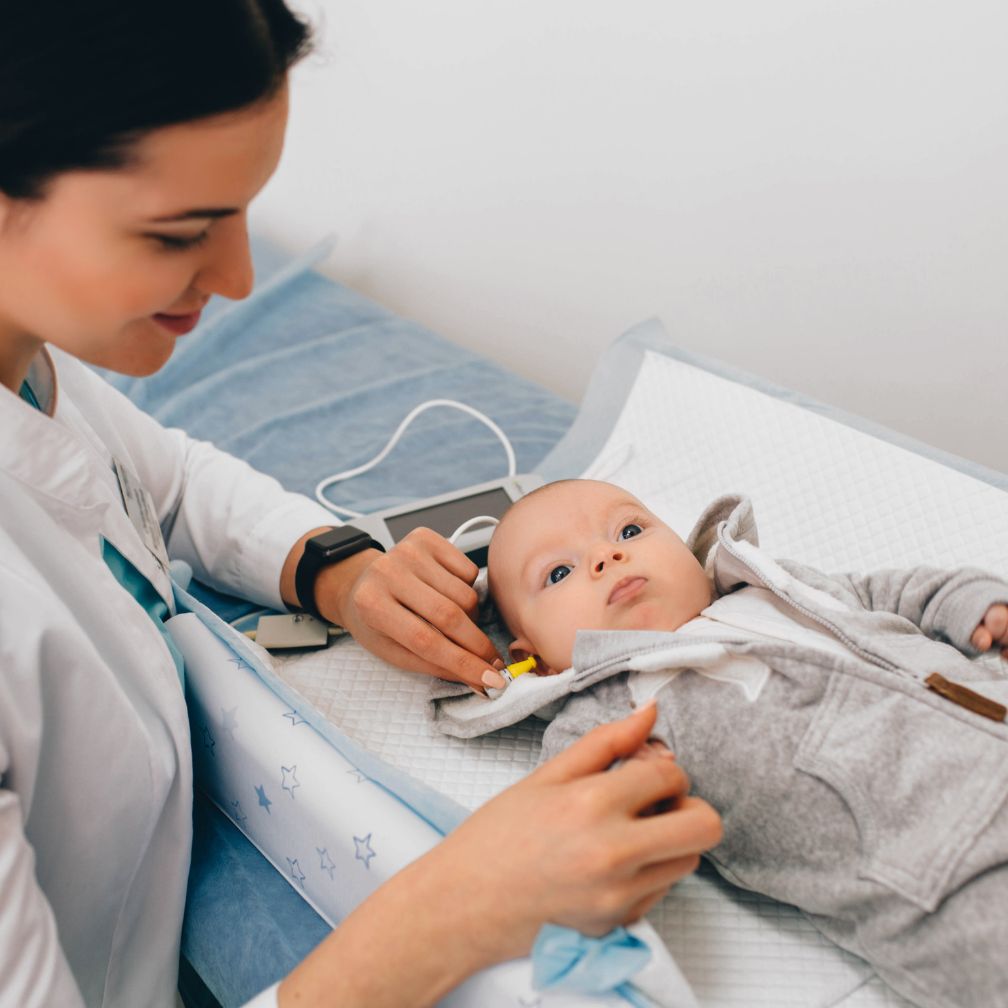
For guardians of newborns, discovering that an infant faces auditory obstacles can prove extremely emotionally overwhelming. But the positive fact is that because of prompt medical testing and early intervention, young children with hearing deficits will effortlessly prosper. Indeed, these children can build key verbal abilities, interactive skills, and solid bonds within their environment, leading to a vibrant, rewarding life!
Combining external hearing aids with targeted cochlear implantation offers two exceptionally successful approaches for guiding infants with hearing loss. In the following segment, we detail their specific functions and explain how to determine the perfect fit for your infant.
Understanding Infant Hearing Loss
Hearing deficits among babies routinely trace back to diverse medical influences, including:
- Specific genetic mutations (even within bloodlines having zero background of impairment)
- Congenital pathogen exposures including cytomegalovirus (CMV) and rubella
- Birth-related trauma, such as neonate oxygen loss or preterm birth
- Specific intensive care medications utilized inside specialized newborn facilities
Which action represents the highest priority? Rapid clinical identification. This critical mandate clarifies why infants across the United States undergo auditory checks before going home with family. Board-certified pediatric audiologists active execute the standardized “1-3-6” care benchmark:
- Completely screened by 1 month
- Fully diagnosed by 3 months
- Therapeutic intervention (employing wearable technology or developmental therapy) initiated prior to 6 months of life
Attaining these developmental checkpoints offers infants an optimal path toward speech acquisition, language mastery, and cognitive growth. When you need advice concerning these newborn checks, your trusted pediatrician stands ready to assist!
Deploying Hearing Aids for Newborns
In supporting babies who exhibit mild to severe hearing deficits, personal hearing aids regularly act as the primary intervention. Such lightweight, wearable tools boost overall volume levels, helping infants pick up human speech and natural environmental sounds with clarity.
Infant-adapted hearing aids function as:
- Safe for young infants as young as a few weeks old
- Crafted featuring soft, comfortable ear inserts that adapt during early physical development
- Equipped with secure battery housing closures and custom pediatric safety options
- Precisely tuned by a certified pediatric audiologist to accommodate your child’s specific hearing levels
During physical development, hearing aids necessitate regular clinical recalibrations to ensure snug placement and precise amplification.
Cochlear Implants in Infant Auditory Care
If a baby experiences severe to profound sensorineural hearing loss while getting minimal improvement from hearing aids, clinicians often recommend a cochlear implant. Differing from external acoustic hearing aids, cochlear implant systems:
- Require precision surgical implantation directly into the auditory system
- Direct sound past non-working areas within the inner ear
- Transform environmental audio into targeted electrical signals that activate auditory nerve fibers directly
Contemporary cochlear implants operate as:
- Formally FDA-sanctioned for use with pediatric patients starting at 9-12 months of age
- Uniquely successful when reinforced by specialized rehabilitation and dedicated household support
- Advised exclusively after a complete clinical review by an audiologist and ENT specialist
This process includes neuroimaging scans, objective hearing assessments, and realistic discussions regarding long-term developmental milestones.
Contrasting Hearing Aids with Cochlear Implants
- Mild to severe levels of impairment utilize Hearing Aids; Severe to profound hearing impairment calls for Cochlear Implants
- Non-Invasive wearable application: Hearing Aids; Invasive (Surgical): Cochlear Implants
- Physical sound amplification: Hearing Aids; Electrical signal stimulation conversion: Cochlear Implants
- Usage can begin in early infancy: Hearing Aids; Starts at 9-12 Months: Cochlear Implants
Final Conclusions: Selecting the Right Path for Your Infant
In the event your infant receives a hearing loss diagnosis, rest assured that clear options alongside extensive professional backing. Under the care of specialized pediatric hearing doctors, countless infants successfully cultivate speech and language proficiency that rivals their normal-hearing peers.
Whether your youngster qualifies for external hearing aids or surgical cochlear implants, early action can make a lifelong difference.
Are you looking for clarity regarding your infant’s hearing development? Reach out to us today to receive a complete diagnostic assessment and personalized rehabilitation plan.